Cash App Clone Development: Cost, Features, and Business Model Explained
- Jessy Rayder
- Jan 9
- 4 min read

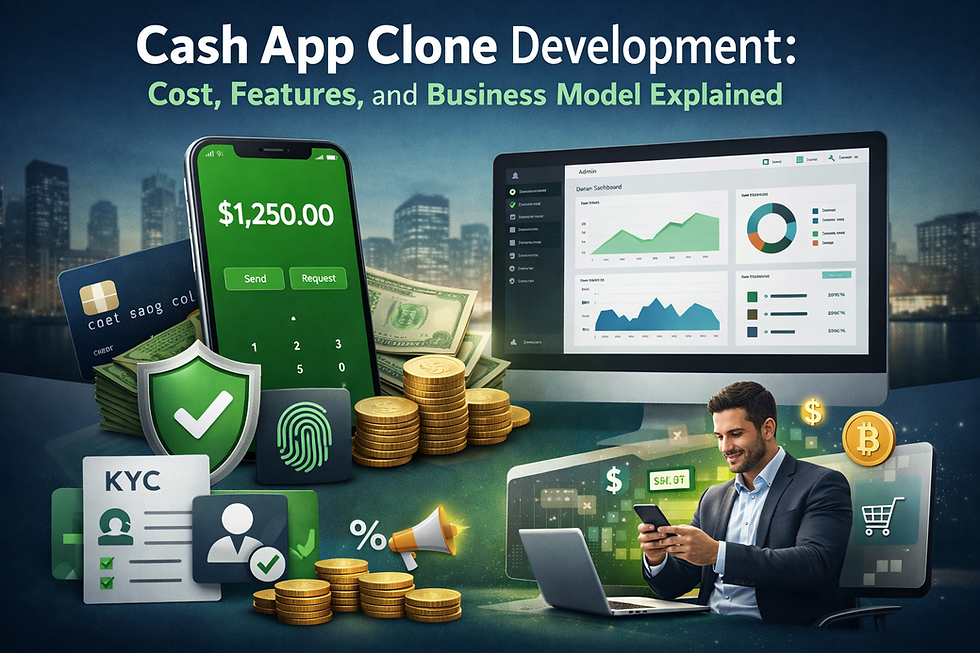
The rapid adoption of digital wallets and peer-to-peer payment platforms has reshaped how individuals and businesses handle money. Among these platforms, Cash App has emerged as a widely recognized solution for instant transfers, bill payments, and simplified financial interactions. This success has encouraged startups and enterprises to explore Cashapp clone development as a way to enter the competitive fintech market with a proven business concept while customizing it for regional and niche-specific needs.
A Cashapp clone is not just a replica of an existing app. It is a customizable digital payment solution that allows businesses to deliver similar core functionalities while adding unique value propositions such as regional payment methods, advanced security layers, or industry-specific use cases.
What Is a Cashapp Clone and How It Works
A Cashapp clone is a ready-to-customize peer-to-peer payment platform inspired by the operational model of Cash App. It enables users to send, receive, and store money digitally using linked bank accounts, cards, or in-app wallets.
From a functional standpoint, the application works through a secure backend system that manages transactions, user authentication, wallet balances, and compliance protocols. A cash app clone script provides the foundational architecture, APIs, and modules required to deploy such a platform quickly while ensuring scalability and reliability.
The workflow typically includes user onboarding, KYC verification, wallet creation, transaction initiation, real-time processing, and confirmation. This seamless process is what makes these apps highly appealing to end users.
Core Features Required in Cashapp Clone Development
User-Focused Features for Seamless Transactions
A successful payment app depends on user convenience and trust. Key features include instant money transfers, wallet balance tracking, transaction history, and contact-based payments. Multi-currency support and QR code payments further enhance usability, especially for international or retail-focused platforms.
Security features such as two-factor authentication, biometric login, and encryption protocols are essential to protect user data and prevent fraud. These elements directly influence user adoption and long-term retention.
Admin Panel and Backend Capabilities
The admin dashboard plays a critical role in managing platform operations. It provides real-time insights into transactions, user activity, revenue streams, and compliance status. Admins can manage user accounts, set transaction limits, handle disputes, and monitor suspicious activities.
A well-structured backend also supports scalability, ensuring the platform can handle increasing transaction volumes without performance degradation.
Compliance and Regulatory Integrations
Financial applications must comply with regional regulations such as KYC, AML, and data protection laws. During Cashapp clone development, integrating compliance tools and verification services ensures legal alignment and builds credibility with users and financial partners.
Cost Breakdown of Cash App Clone Development
Factors Influencing Development Cost
The cost of building a Cashapp clone depends on several variables, including feature complexity, platform choice, and development approach. A basic version with standard P2P transfers and wallet features costs significantly less than an advanced solution with cryptocurrency support, stock trading modules, or AI-based fraud detection.
Customization level also impacts cost. Businesses opting for a cash app clone script typically reduce initial development expenses, as the core framework is already built and tested.
Estimated Cost Ranges
For a basic Cashapp clone with essential features, development costs usually range from $5,000 to $10,000. A mid-level solution with enhanced security, analytics, and third-party integrations can cost between $10,000 and $20,000. Advanced platforms with multi-currency wallets, blockchain integration, and enterprise-grade security may cost more than $ 25,000.
Ongoing expenses, such as server hosting, maintenance, updates, and compliance audits, should also be included in the total investment.
Business Model Behind a Cashapp Clone
Transaction-Based Revenue Streams
Most payment apps generate revenue through transaction fees. These can be applied to instant transfers, cross-border payments, or merchant transactions. Even minimal fees can generate substantial income when transaction volumes scale.
Subscription and Premium Features
Offering premium subscriptions unlocks advanced features such as higher transaction limits, faster settlements, or exclusive financial tools. This model ensures predictable recurring revenue while catering to power users.
Merchant Partnerships and Advertising
Integrating merchant payment solutions allows businesses to earn commissions from partner brands. In-app promotions and targeted advertisements further diversify income sources without compromising user experience.
Technology Stack Used for Cashapp Clone Development
A robust technology stack ensures performance, security, and scalability. Frontend frameworks such as React Native or Flutter enable cross-platform development, while backend technologies like Node.js or Python support real-time processing. Secure databases, cloud infrastructure, and API integrations form the backbone of the platform.
Choosing the right stack also determines how easily new features can be added as the business grows.
Benefits of Launching a Cashapp Clone for Startups
Launching a Cashapp clone reduces market entry risks by leveraging a proven business model. It shortens development timelines, lowers costs, and allows businesses to focus on branding and user acquisition. With proper customization, startups can differentiate themselves and target underserved markets or specific demographics.
The scalability of these platforms makes them suitable for long-term growth, whether expanding to new regions or adding financial services.
Conclusion
Cashapp clone development offers a practical and scalable pathway for businesses looking to enter the digital payments ecosystem. By leveraging a customizable cash app clone script, companies can launch feature-rich platforms faster while maintaining flexibility for future enhancements. Understanding the cost structure, essential features, and revenue models is crucial for building a sustainable and competitive fintech solution that meets user expectations and regulatory standards.
Frequently Asked Questions
How long does it take to develop a Cashapp clone?
Development timelines vary based on customization and feature scope. Using a ready-made script can reduce the timeline to 8–12 weeks, while fully custom solutions may take several months.
Is a Cashapp clone secure for financial transactions?
Yes, when built with proper encryption, authentication protocols, and compliance measures, a Cashapp clone can provide enterprise-level security comparable to leading payment platforms.
Can I customize features in a cash app clone script?
Most scripts are designed to be highly customizable. Businesses can modify the UI, add new payment options, integrate third-party APIs, and tailor the platform to specific markets.
What industries can benefit from Cashapp clone development?
E-commerce, retail, gig economy platforms, and service-based businesses can all benefit from integrating a digital wallet and P2P payment solution into their ecosystems.
Is regulatory compliance mandatory for launching a Cashapp clone?
Yes, compliance with financial regulations is essential. Integrating KYC, AML, and data protection mechanisms ensures legal operation and builds user trust.



Comments